Insights
News about faculty and their research
On this page:
Rising inequality is making Americans less likely to support a higher minimum wage

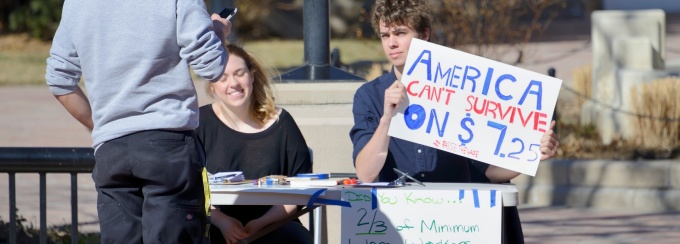


— Daniela Goya-Tocchetto, assistant professor of organization and human resources, on her study that found support for raising the minimum wage has declined as the gap between rich and poor has increased due to “is-to-ought” reasoning — a philosophical distinction between statements about what is (facts) and what ought to be (values, morals, norms). The study appeared in the Journal of Experimental Psychology General. Read more at bit.ly/minimum-wage-research


Businesses face hidden loan costs after going public


— Luca Lin, assistant professor of finance, on his research that found going public can help a company get better loan terms and more easily borrow from different banks, but the firms can also face hidden loan costs. The study appeared in the Journal of Corporate Finance. Read more at bit.ly/ubmgt-ipo-loans.


How to best support medical patients without homes



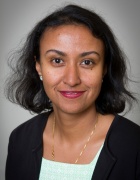
— Sanjukta Das Smith, associate professor of management science and systems, on her research revealing that after unhoused people leave the hospital, they achieve the best outcomes when leaders and frontline staff at health and social service agencies work together to provide care. Smith collaborated on the study with researchers from the UB School of Nursing and UB School of Public Health and Health Professions, and it appeared in the Journal of Interprofessional Care. Read more at bit.ly/unhoused-care.


Federal regulation makes companies more honest

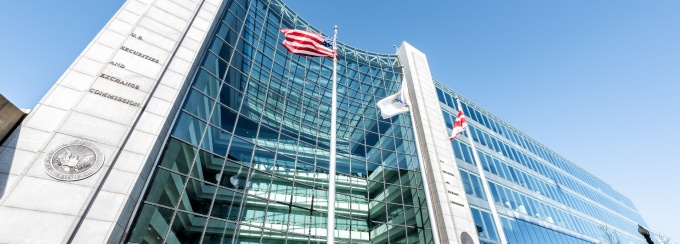

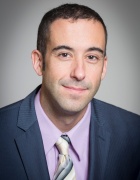
— Michael Dambra, associate professor and Kenneth W. Colwell Chair of Accounting and Law, on research about how a new U.S. Securities and Exchange Commission regulation aimed at curbing CEO pay is prompting companies to strengthen their financial reporting by improving transparency, hiring more accountants and paying higher audit fees to ensure accuracy, while resisting the urge to inflate executive pay. Read more at bit.ly/ubmgt-ceopay.


Why workaholics can’t switch off




— Min-Hsuan Tu, associate professor of organization and human resources, on her research addressing the persistent difficulty most employees face in getting work off their minds. Reflecting on personal, nonwork goals in the evening can support well-being and help many people feel better, though workaholics remain a notable exception. The study appeared in the Journal of Applied Psychology. Read more at bit.ly/ubmgt-workaholics.


Corporate culture can reduce disparities in financial services




— Feng (Jack) Jiang, associate professor of finance, on his research that found consumers in communities of color receive significantly poorer financial services than those in low-minority communities, but stronger competition among banks and specific practices within them can help level the playing field. The study appeared in the Journal of Accounting Research. Read more at bit.ly/ubmgt-financial-equity.


New studies reveal two factors that mask economic inequality



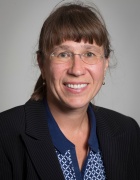
— Kate Bezrukova, associate professor of organization and human resources, on her paper that proposes setting a clear boundary for researchers between “pre-public AI” and “post-public AI” after the release of ChatGPT in 2022. Her paper appeared in a special issue of Small Group Research. Read more at bit.ly/ub-public-ai.


Decision making society names award in honor of Zionts

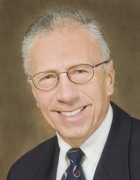
The International Society on Multiple Criteria Decision Making has renamed its annual Presidential Service Award in honor of Stanley Zionts, Alumni Professor Emeritus of Decision Support Systems, and UB Distinguished Professor Emeritus. The honor will now be known as the Stan Zionts Presidential Service Award, honoring Zionts’ unique contributions to the society and its research.
Zionts founded and served as the first president of the society from 1975-1992, and was awarded its Gold Medal Award and the Presidential Service Award. In addition to teaching on campus, he taught in the school’s programs in Riga, Latvia; Montpellier, France; Dalian, China; and Beijing, China. Zionts retired from the School of Management in 2005 after 38 years of service.


When auditors walk, clients pay




Szerwo

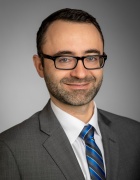
Khavis
— Joshua Khavis, assistant professor of accounting and law, on his study about auditor turnover with co-author Brandon Szerwo, assistant professor of accounting and law. The study finds that as auditor turnover increases, an accounting firm’s ability to deliver timely, accurate and effective audits declines — and so does overall client service. The study appeared in The Accounting Review. Read more at bit.ly/ubmgt-auditor-turnover.

