Insights
News about faculty and their research
On this page:
Telehealth boomed during COVID, but in some areas, its promise fell short




— Raj Sharman, professor of management science and systems, on his study that found telehealth use surged during the COVID-19 pandemic, but some U.S. counties struggled to use resources efficiently, revealing widespread misallocation of healthcare infrastructure, workforce and technology. The study appeared in Operational Research. Read more at bit.ly/ubmgt-telehealth.
Leadership growth requires reflection and support — not blame




Grijalva


Maynes
— Emily Grijalva, associate professor of organization and human resources, on her humility research with co-author Timothy Maynes, associate professor of organization and human resources, which advances an original theoretical process model that explains how people interpret self-diminishing events. They found that whether life experiences actually produce humility depends on how people process them afterward. The study was published in the Journal of Management. Read more at bit.ly/UBMgt-HumilityResearch.
Privacy has a price



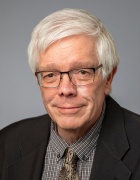
Sanders


Amo


Gaia


Murray
— Lawrence Sanders, professor emeritus of management science and systems, on his study that found that even when tech professionals believe they are likely to be caught, many can still be tempted into violating health privacy laws if the payoff is high enough. The study was published in Engineering Management Review. He collaborated on the research with Laura Amo, associate professor of management science and systems; Joana Gaia, clinical assistant professor of management science and systems; David Murray, clinical professor of management science and systems; and Raghav Singh, PhD in management candidate. Read more at bit.ly/ubmgt-healthcare-study.
How #MeToo led to improved loan access for women




Lindsey


Tiu


Sharman
— Charles Lindsey, associate professor of marketing, on his study that found female borrowers on peer-to-peer lending platform Kiva were funded more quickly after #MeToo rose to prominence in 2017 — and that rate continued to rise as the number of high-profile #MeToo events increased. He collaborated on the study with Cristian Tiu, associate professor of finance, and Raj Sharman, professor of management science and systems, and the research was nominated for a Best Paper award at the International Conference on Information Systems. Read more at bit.ly/ubmgt-metoo-loans.
More women, better audits




Khavis


Szerwo
— Brandon Szerwo, associate professor of accounting and law, on his study about the gender composition of audit teams he coauthored with Joshua Khavis, assistant professor of accounting and law. The study finds that audit teams with more women, particularly audit leaders, consistently report fewer financial misstatements and charge lower audit fees. The study appeared in the Review of Accounting Studies. Read more at bit.ly/UB-audit-teams.
Your AI chat may reveal more than you think




— Shaojie Tang, chair and professor of management science and systems, and faculty director of the Center for AI Business Innovation, on his research examining how privacy detection models can be developed for real-world AI interactions and whether users could be warned before unintentionally sharing private details. The paper was accepted by the leading data science and AI conference KDD 2026. Read more at bit.ly/UB-AI-Privacy.
Successful minority employees can create a false sense of diversity



— Daniela Goya-Tocchetto, assistant professor of organization and human resources, on her study that found highly successful women and racial minorities help to challenge stereotypes and serve as role models for members of their social groups, but seeing them in prominent roles can also create the illusion that organizations are more diverse than they really are. The study appeared in the Journal of Applied Psychology. Read more at bit.ly/ubmgt-minorities-orgs.
Remote work takes toll on audit leaders




— Joshua Khavis, assistant professor of accounting and law, on his study examining how the abrupt transition to remote work during the COVID-19 pandemic affected accounting professionals. The researchers found that audit leaders, such as managers and partners, were the most affected because they were forced to navigate more complex communications and take on new technical challenges. The study appeared in Accounting Horizons. Read more at bit.ly/UBMgt-remote-audit.
Why doesn’t the U.S. recycle more plastic?




— Aditya Vedantam, associate professor of operations management and strategy, on his study that finds areas with higher income and education levels tend to be closer to large-scale industrial recycling facilities, making recycling more convenient and accessible. In contrast, communities with less wealth and formal education often have fewer — if any — nearby facilities, which makes recycling more difficult and expensive. The study appeared in Communications Sustainability. Read more at bit.ly/UB-recycling-inequities.