Trending Topics
The unconscious side of decision-making
How do we actually decide what to buy, what to share and what to believe?
By Kevin Manne



Hennessy


Saxton
We like to think we weigh options, consider the facts and choose wisely, but research tells a more complicated story. We asked two experts: M. Kim Saxton, clinical professor of marketing, and John Hennessy, clinical assistant professor of marketing, about the hidden forces that drive consumer behavior and what that means for the businesses trying to reach them.
M. Kim Saxton: We rarely make rational decisions, and especially not when it comes to everyday purchases. There’s a marketing theory that goes back to what’s sometimes called the reptilian brain: that in any situation, you’re making an instantaneous decision to fight or flee. Your brain is a giant computer that uses pattern matching and heuristics, and it automatically has its go-tos. You have no control over this. Could you imagine how much work you would have to do if you were rational in every choice? We develop habits and routines so we can get through our day with the least cognitive load.
John Hennessy: And people genuinely don’t know when it’s happening. When we did some virtual reality eye-tracking research, we saw that men look to the horizon at about a 96% rate, and women look within a six-to-eight-foot circle at roughly the same rate. It’s literally hunter-gatherer instinct playing out in a modern retail environment.
MKS: Recent research around Super Bowl advertising found that when you ask someone what ads they’re going to share, they think of their favorite brands and say those. That’s their genuine intent. But what actually drives sharing is emotion. They share the things that either gave them a real emotional high or was so strange or disgusting that they felt compelled to pass it on.
JH: It shows up in packaging research too. We worked with a company that enlarged the baby’s face on their boxes. Nothing else about the product changed, and sales went up. People are drawn to faces. It’s deeply human. Consumers couldn’t have told you that a slightly bigger face on the packaging would make them more likely to buy, but the data was clear.
What does that mean for traditional research methods like surveys and focus groups?
MKS: It means they’re telling you part of the story. We had a client recently ask why his focus group research was never predictive of what happened in the market. The answer was that you asked people to tell you what they were going to do, and people always overstate their behavior change. We tracked one company’s customers over four months after they said they’d change their behavior, but 80-90% just kept doing what they were already doing. They can’t help it. It’s habit.
JH: There are about 260 products the average household buys on repeat, and they keep buying them because it’s easy and they’ve come to trust those things. The challenge for marketers is that you can’t just ask people if they’ll change. You have to watch what they actually do.
So how do you get at what people won’t or can’t tell you?
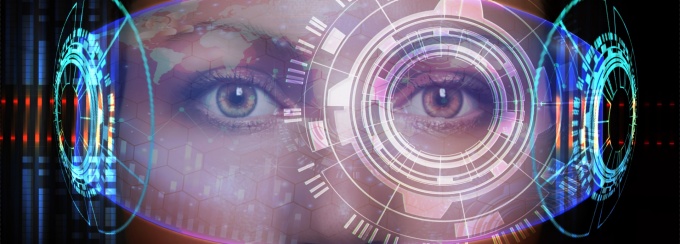
MKS: That’s where our Behavioral Research Lab comes in. Instead of asking people what they notice, we can see what they actually looked at. We bounce infrared light off their eyes to track exactly what they’re looking at on a website, a package or an ad. We’ve seen situations where someone looks directly at a button and doesn’t click it, scrolls past a second instance of that same button and only finds it on the third try. That’s a design problem you’d never catch with a survey. We also record participant faces and use AI to code the emotions they’re displaying in real time. We learn when they express confusion, disgust, surprise and other emotions.
Galvanic skin response is another tool. It measures sweat response as a proxy for emotional arousal. Recently we were running a study for a spice company and went to remove the sensor from a student’s hand, and it was soaking wet. When I asked what he’d experienced, he said the brand reminded him of grilling with his father, whom he’d missed since starting school. He had no conscious awareness of that response. That’s the kind of insight you simply cannot get by asking someone how they feel about a product.
What’s one thing business leaders consistently get wrong about how their customers make decisions?
JH: They assume customers think the way they do. We see it constantly; a team will look at their own website and say they know exactly how to navigate it, and then watch customers get completely lost.
MKS: Marketers also tend to get caught up in features when customers think in benefits. I don’t really care how many songs a device holds, I want to know how many hours of listening pleasure before the battery dies. That reframe changes everything. A lot of the time businesses aren’t offering something that’s actually better than what consumers already have. They’re building a solution in search of a problem.
What’s one piece of practical advice you’d give to every marketing professional based on what you know about decision making?
JH: Do more research. Don’t assume. It doesn’t take a massive sample, just ask people how they would use your product. And then actually listening to the answer can be revelatory.
MKS: And test before you launch. Whether you’re appealing to fear, humor, disgust or other emotions, these tools can be extraordinarily powerful or catastrophic depending on the execution. You think edgy content will have stopping power, but it often has shutdown power. People don’t push back, they just stop seeing it entirely. The brain avoids what makes it uncomfortable. Understanding that is the foundation of good marketing.
The science behind decisions
The behavioral lab uses cutting-edge neuromarketing tools to uncover insights into human behavior. Though eye-tracking, facial coding and galvanic skin response, the lab empowers students, faculty and external collaborators with state-of-the-art resources to conduct research that makes a tangible impact in the real world. To learn more, visit management.buffalo.edu/behaviorlab.
Partner Companies