Discovery, delivered
When business meets biotech
By Alexandra Richter


Based in Palo Alto, California, a team led by biotech industry veterans is in the final stages of clinical testing for important therapeutics focused on preventing vision loss for millions of people globally — and John Borgeson, BS ’83, is leading the financial and operational strategy behind it.
Borgeson is chief financial officer of Kodiak Sciences, a biopharmaceutical company committed to preventing and treating the leading causes of blindness. The company is developing medicines for retinal diseases that are designed to work quickly to stop the progression of underlying disease, while at the same time requiring fewer injections for patients. If successful, the next step after the company’s late-stage clinical trials will be filing for regulatory approval.
“Innovation is created at the intersection of business and science,” says Borgeson. “You can have a lot of great ideas, but you need a business focus to put the ideas into the right vehicle, find proper funding and connect with the right partners who are in it for the long haul.”
Borgeson knows the long, complex journey of turning scientific discovery into treatment. Over the course of his career, he has been a financial leader for several clinical-stage biotech companies and spent more than two decades at Pfizer, most recently as vice president of finance.
Bringing new medicine to patients generally takes a decade or more and includes early-stage research, deep scientific analysis, scale-up manufacturing, designing and running clinical trials, regulatory approvals and then commercialization of the medicine globally. And the average cost of bringing a medicine to the market is approximately $2 billion.
Yet for Borgeson, and a growing group of School of Management alumni, turning science into medicine is an exciting challenge, fueled by the promise of improving lives. At the same time, our School of Management faculty and students are advancing research in analytics, finance, operations and more to ensure breakthroughs reach people who will benefit the most.

Leading with laser focus

Senior scientist Navneet Momi in a lab at Ernexa Therapeutics. Photo: Dipmoy Nath
At Ernexa Therapeutics, CEO Sanjeev Luther, MBA ’85, and his team are focusing on developing innovative, affordable, off-the-shelf cell therapies for the treatment of advanced ovarian cancer and the autoimmune disease rheumatoid arthritis.
“What brought me to biotech was one thing — hope,” Luther says. “Today, a platinum-resistant patient has to go every week to get an infusion. Our novel technology, in preclinical trials, can offer new options for patients, ultimately creating hope by providing better quality of life and longer life.”
Luther is a seasoned pharmaceutical executive with more than 30 years of experience in public and private biotechnology and global pharmaceutical companies. He attributes his success at Ernexa to the analytical training he received at the School of Management.


Sanjeev Luther, MBA ’85
“I’m not a scientist or a physician, but I can read data, including manufacturing data, and know immediately whether we are making the right decisions,” says Luther. “To be a successful leader, you need analytical horsepower.”
He also says leaders must have laser focus, relentless execution and persistence, and he strives to pass on these traits to the next generation of leaders.
One UB student inspired by Luther and Ernexa’s mission is Olivia Mullen, BS ’24, and current MBA candidate. Mullen joined Ernexa as an intern, thanks to BizLink, the online career management system exclusively for School of Management students used by the Career Resource Center. In addition to working with Luther, Mullen had the opportunity to work with an all-women finance team.
“Each week, Sanjeev would send articles on the biotech industry to help interns stay well-informed,” says Mullen. “The internship was an empowering learning experience, and it opened my eyes up to future opportunities in biotech.”
Where technology drives innovation


Ryan Snyder, MBA ’98
While researchers chase the next biotech breakthrough, finance professionals find funding, and CEOs unite teams around a shared vision, IT leaders like Ryan Snyder, MBA ’98, are creating the digital foundation that accelerates discovery.
As chief information officer at Thermo Fisher Scientific Inc., Snyder leads the company’s global digital and IT organization. Thermo Fisher delivers innovative technologies and services to help customers advance life sciences research and bring life-changing therapies to market, while also operating the largest contract pharmaceutical manufacturing organization in the world.
In his current role, Snyder oversees everything from applications and infrastructure to cybersecurity, automation, e-commerce and artificial intelligence — and safeguards the sensitive data that drives discovery and manufacturing. After more than two decades at Thermo Fisher, in roles across various business units, he has seen how technology leadership has rapidly evolved.
“If you use the metaphor of sitting in a car: IT leaders used to be in the back seat, as enablers of the strategy,” Snyder says. “I’ve seen us move from the back seat to the front seat, sitting side by side and viewed as a strategic partner. Now, in the last 24 months we are being pushed into the car out front and being asked to lead. It’s changing incredibly fast and leaders are looking to their technology partner asking ‘what should we do next?’”
And, when it comes to AI strategy, Snyder and his team are harnessing the technology through three approaches: driving productivity across the company, embedding AI capabilities into the products and services they offer, and creating a better customer experience through AI-enabled e-commerce.
“We now have the opportunity to align different tools and strategies based on customer needs.” Snyder says.
Market realities

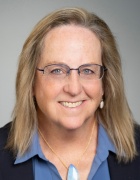
M. Kim Saxton
As the biotech landscape continues to transform, both academic leaders and industry veterans must navigate how to match the promise of new trends with the realities of market dynamics.
M. Kim Saxton, clinical professor of marketing, has seen this tension firsthand throughout her career, including during her time leading marketing strategy at Eli Lilly.
“From the science side, researchers ask ‘does it work?’ and from the business side you have to ask ‘can we make any money at it?’” Saxton says. “You need both.”
Today, she sees the industry shifting to personalized medicine, with advances in biologics, gene editing and CAR-T therapies for cancer.
“We’re moving away from one-size-fits-all drugs,” she says. “CRISPR, a tool scientists use to edit genes, and similar tools are pushing us toward truly tailored treatments.”
But with personalization comes another major hurdle: scalability. Even when a new therapy works scientifically, it is expensive and time consuming to produce.

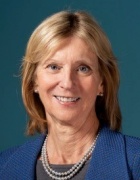
Margie McGlynn, MBA ’83
This is a challenge Margie McGlynn, MBA ’83, knows well. McGlynn, former president of Merck’s Human Health Division, has spent her career at the intersection of science and business, bringing new medicines and vaccines to market to prevent or treat such diseases as HPV, cervical cancer and AIDS.
Now, as president and founder of the Hempling Foundation for Homocystinuria Research, established in honor of two of her sisters who died from the rare metabolic genetic disease, she has funded a proof-of-concept study for a treatment that was then licensed by a biotech firm and has shown up to a 67% reduction in homocysteine in the first phase of human testing. Today, that therapy is in phase three clinical trials, moving closer to market as manufacturing processes are scaled up.
But, even as she sees technologies and therapies showing promise, the challenge isn’t just scientific, it’s financial.
“The strategy of most rare disease foundations like mine is to fund proof-of-concept studies, often at research-based universities, which may then lead to funding and in-licensing from biotech or pharma to make the investments to bring these products to market. Technologies like gene editing hold promise across many disease areas,” she says. “But what I’m worried about is that funding isn’t available to bring those products to market because the ROI isn’t there. Some rare diseases have 40 patients globally. You don’t want to raise families’ hopes when it is unclear who will pay to bring the treatments to life.”
Funding bold ideas


David Fallace, MBA ’99
Executives across the industry are often faced with financing challenges. This includes Kodiak’s Borgeson in each of his roles with pre-commercial biotech companies.
“If it is a value-added activity, we really lean into that, and we try to not let short-term financing constraints get in the way of long-term advancements,” Borgeson says.
And, a new generation of venture capital firms are stepping up, with funding as well as a deep understanding of the science and a willingness to bet on bold ideas.
When David Fallace, MBA ’99, co-founded Cure Ventures, he had more than 20 years of experience investing in private equity, hedge and venture portfolios for multibillion-dollar institutions, through leadership roles at Polaris Partners, TIFF Investment Management, the Alaska Permanent Fund and more.
Fallace launched the $350 million biotech fund to focus on ground-breaking curative technologies and offer seed funding to promising startups.
“At Cure, our strength is our team,” he says. “We have expertise across disease areas and modality. I match my legal and financial skills with scientists who are smarter than me — and that’s the secret.”
For Fallace and his team, artificial intelligence is another tool in their arsenal that will help them rapidly identify and assess high-potential science.
“We use AI as a toolset to write code and access datasets more efficiently,” he says. “We’ve developed a system called Mendel, a genetics data warehouse that supports faster, smarter decision-making.”
When science becomes care


Milind Sohoni
Bringing therapies from lab to patient is shaped by economics, policy and infrastructure. After the science, strategy and infrastructure are in place, innovation is tested in the health care system where the patient feels the impact of a decade or more of research.
Milind Sohoni, chair and professor of operations management and strategy, and faculty director of the Center for Supply Chain Analytics, conducts research in such areas as supply chain and health care analytics.
“The real question is how to reach communities and bring everyone into the health care fold,” Sohoni says. “The COVID-19 pandemic offers examples of how to innovate to build the capabilities of even getting vaccines to very remote areas through temperature-controlled transport. Over the last decade, we’ve seen several innovations in remote medicine, monitoring and pharmaceutical supply chains to make health care more affordable and accessible.”
The most powerful breakthrough in biotech, then, may not be a pharmaceutical or biological. It may be ensuring the solution reaches patients who need it most.
And, School of Management alumni like John Borgeson and his team at Kodiak Sciences, who are creating medicines to prevent vision loss, lean into the challenge.
“There is no business, in my opinion, that is more complex than a fully integrated pharmaceutical company that does early-stage research, manufacturing, clinical trials and commercialization, all under stringent regulatory oversight. Each of these disciplines is deep with complexity,” Borgeson says. “There is a lot to dig into. It is incredibly rewarding. And, at the end of the day, you’re benefiting people by delivering important medicines that improve the quality of lives.”


